
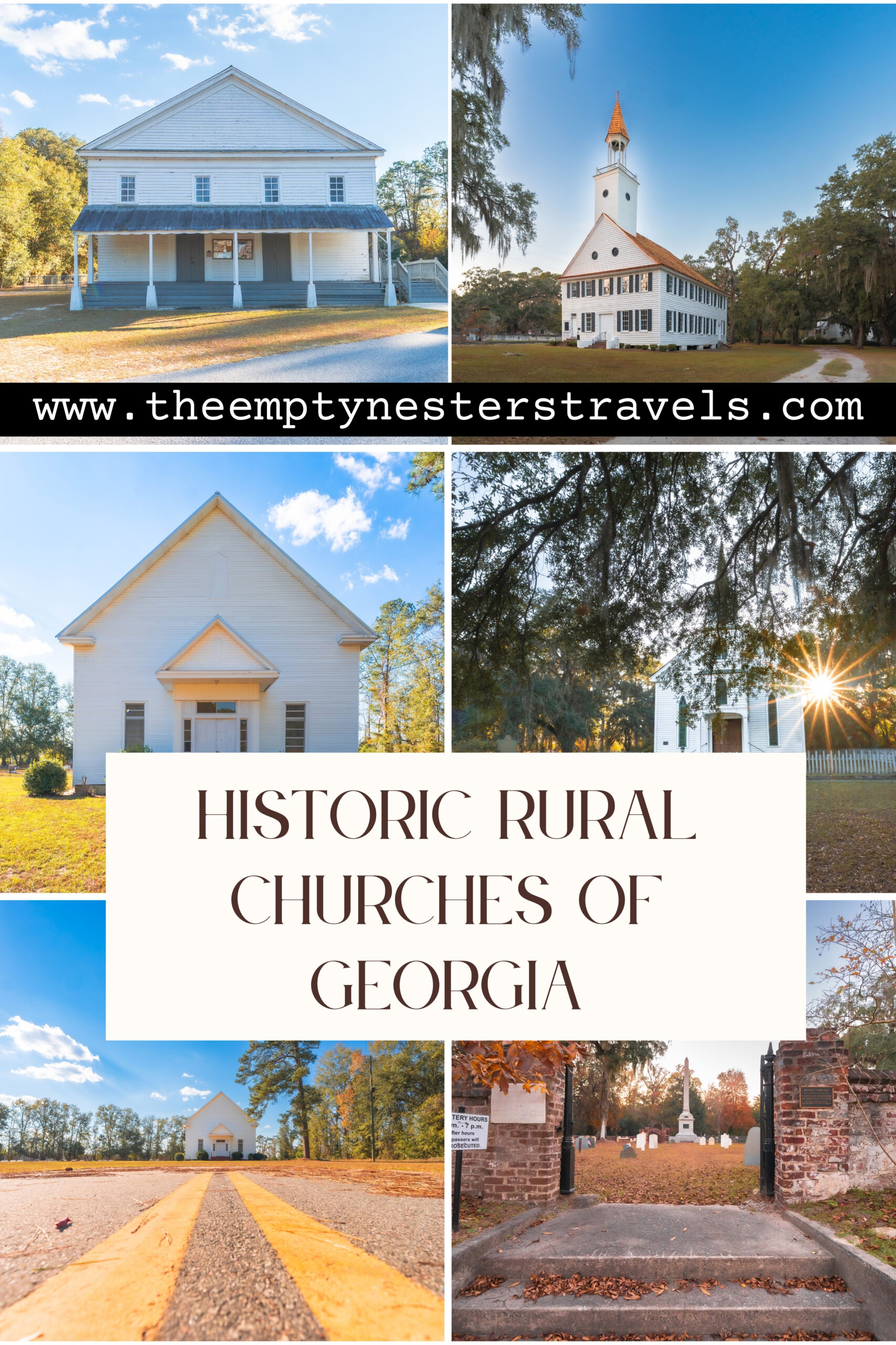
There is no better way to understand the soul of Georgia than by leaving the highways behind and letting the backroads guide your day. These winding two-lane roads cut through farmland, pine forests, tiny crossroads towns, and forgotten communities—each with a story waiting in silence. Along these routes lie some of the most meaningful historic landmarks in the state: the historic rural churches of Georgia.
Years ago, I set out on a mission to visit every one of the documented rural churches of Georgia, those simple yet profound sanctuaries cataloged so carefully by the Historic Rural Churches of Georgia project (HRCGA). My very first stop was Young’s Chapel Methodist in Ben-Hill County—a small, weathered church set among the fields. I didn’t know it then, but that visit would spark a deep passion for chasing backroads, photographing forgotten stories, and preserving the spirit of historic churches of Georgia through travel writing.
Life and distance slowed the journey, but recently we’ve picked it back up, revisiting old favorites and exploring new places through the lens of “Drive the Backroads”—our reminder that the best discoveries come slowly and intentionally.
This weekend’s drive took us down some of the prettiest rural roads in Tattnall, Long, Liberty, and Evans counties. Here’s a look at the churches, the roads, and the stories that made this trip unforgettable.
Why Backroads Are the Best Way to Discover Georgia’s Rural Churches
The beauty of exploring the historic rural churches of Georgia is that they aren’t clustered in bustling towns. They’re tucked down red-dirt lanes, nestled beside rustling pecan orchards, or sitting quietly at forgotten intersections where only the birds seem to know the past.
Driving these backroads offers something special:
- A slower pace, where miles aren’t rushed but savored
- Scenic landscapes, from moss-draped oaks to wide-open farmland
- Unfiltered history, untouched by tourist crowds
- A deeper sense of place, because every church sits exactly where a community once lived, prayed, and gathered
When you approach these churches on the backroads, you see what their congregations saw: the same tree lines, the same fields, the same quiet.
Young’s Chapel Methodist – Ben-Hill County
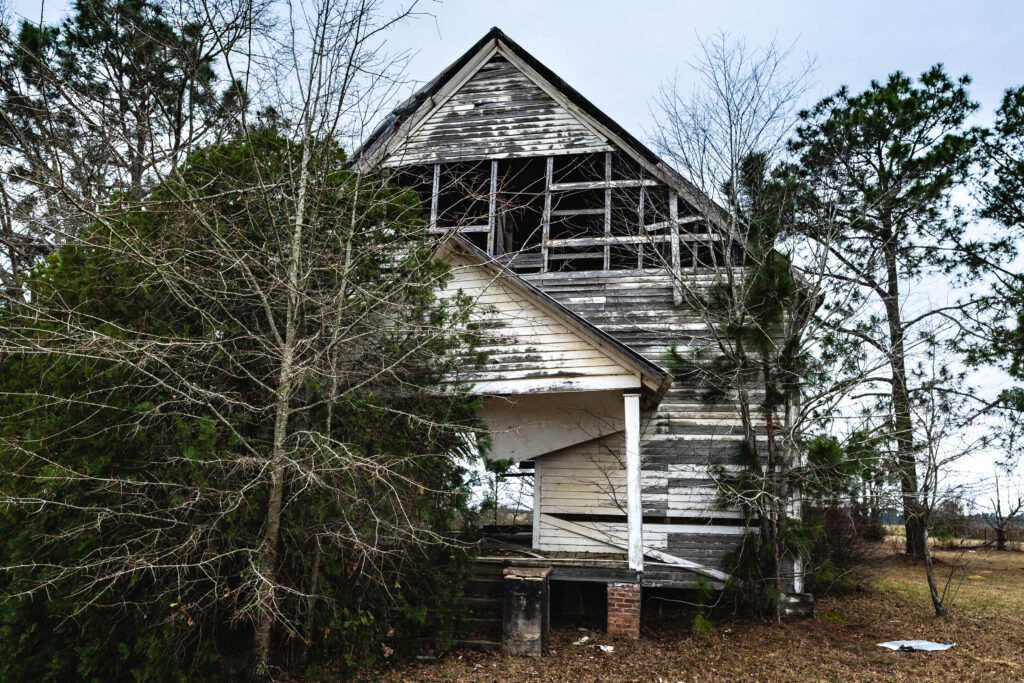
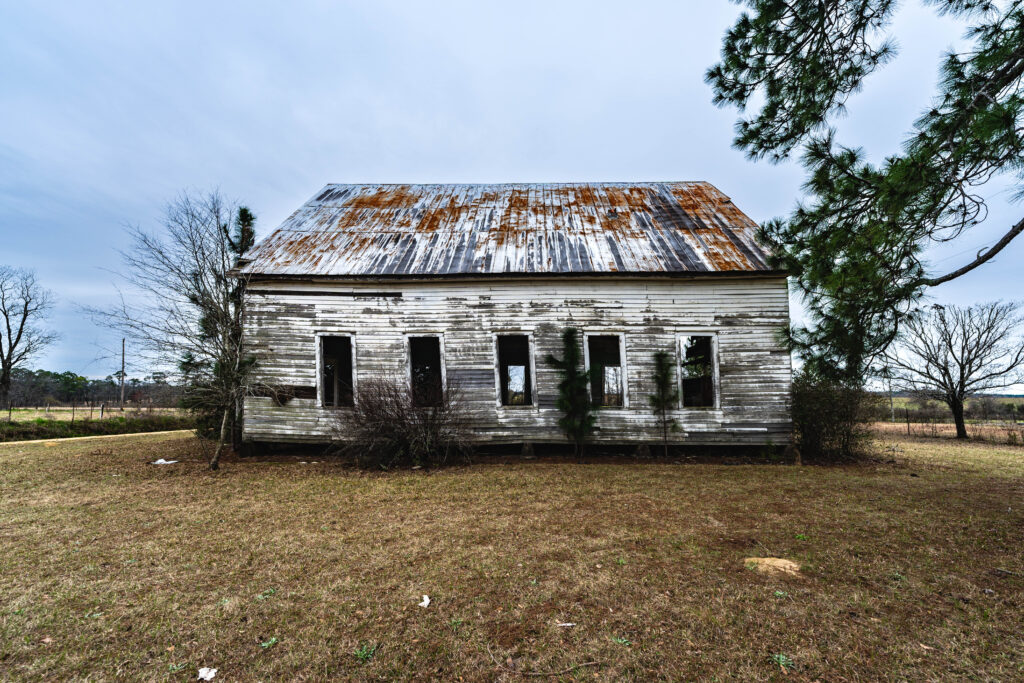
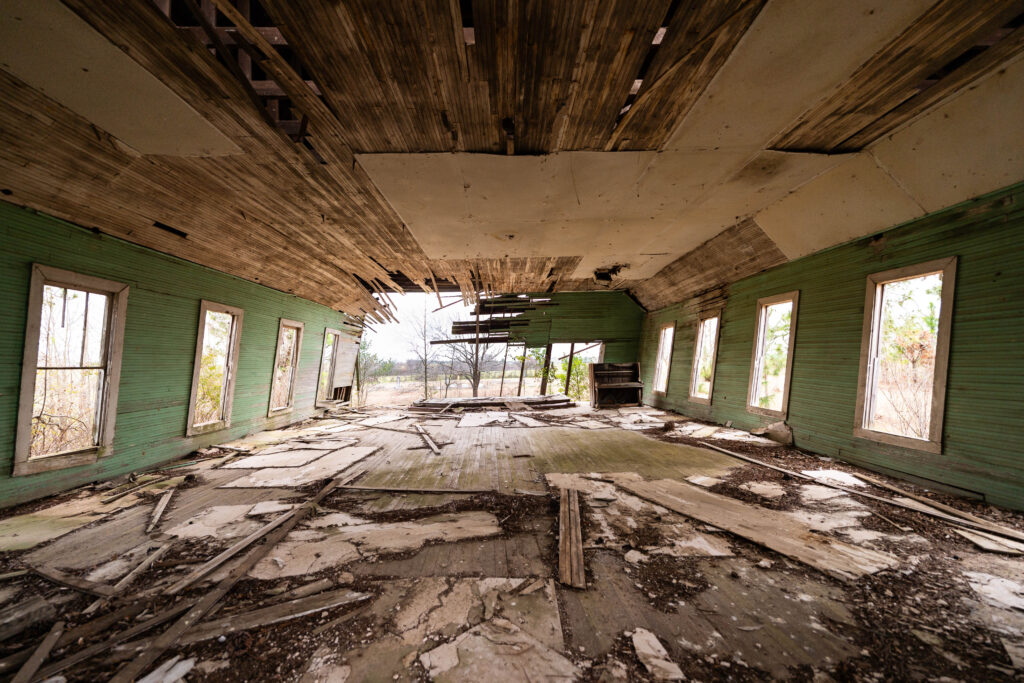
My journey years ago into the historic rural churches of Georgia began right here at Young’s Chapel Methodist. Sitting alone among the open fields of Ben Hill County, this little wooden sanctuary captured my heart from the very beginning. There’s something about its humble design, its worn beauty, and the quiet echoes of a long-gone congregation that still draws me back. Revisiting it now feels like visiting an old friend—one that may not be standing much longer.
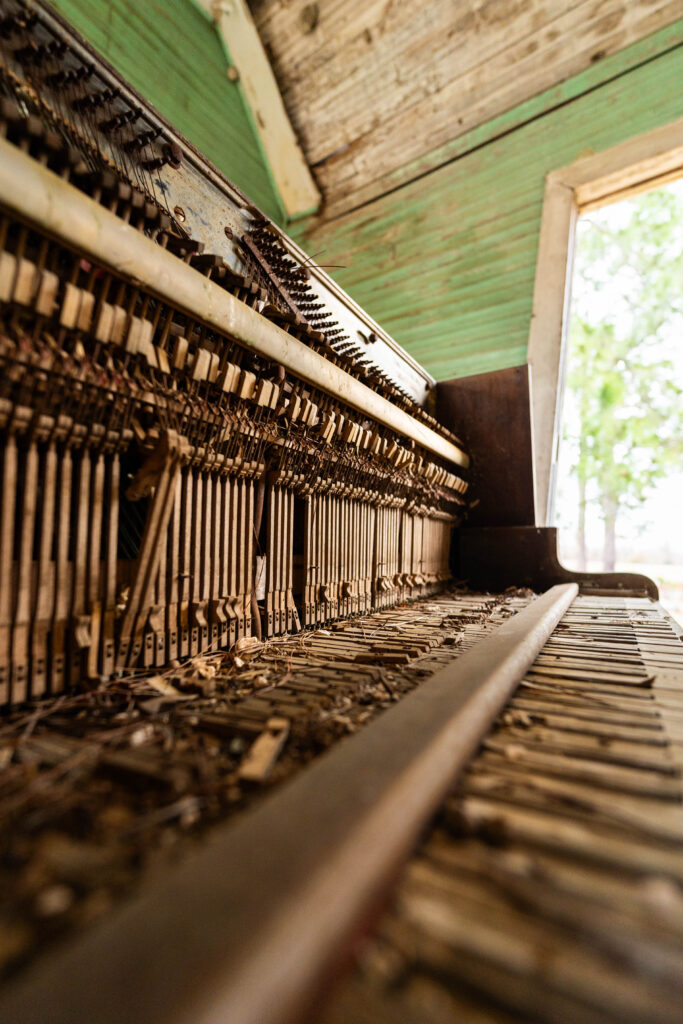
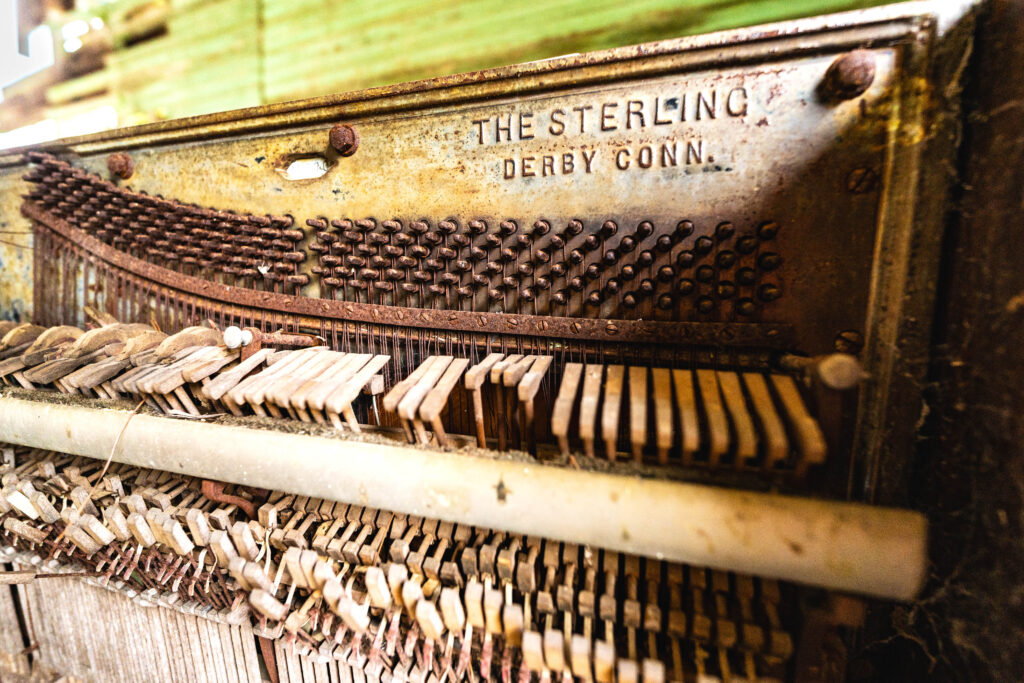
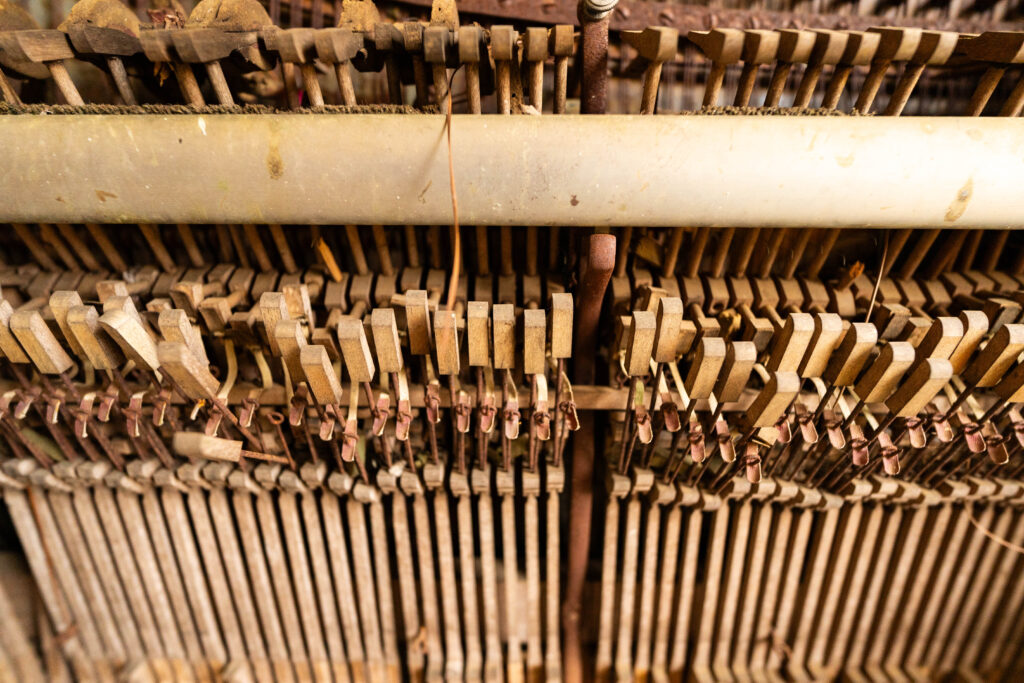
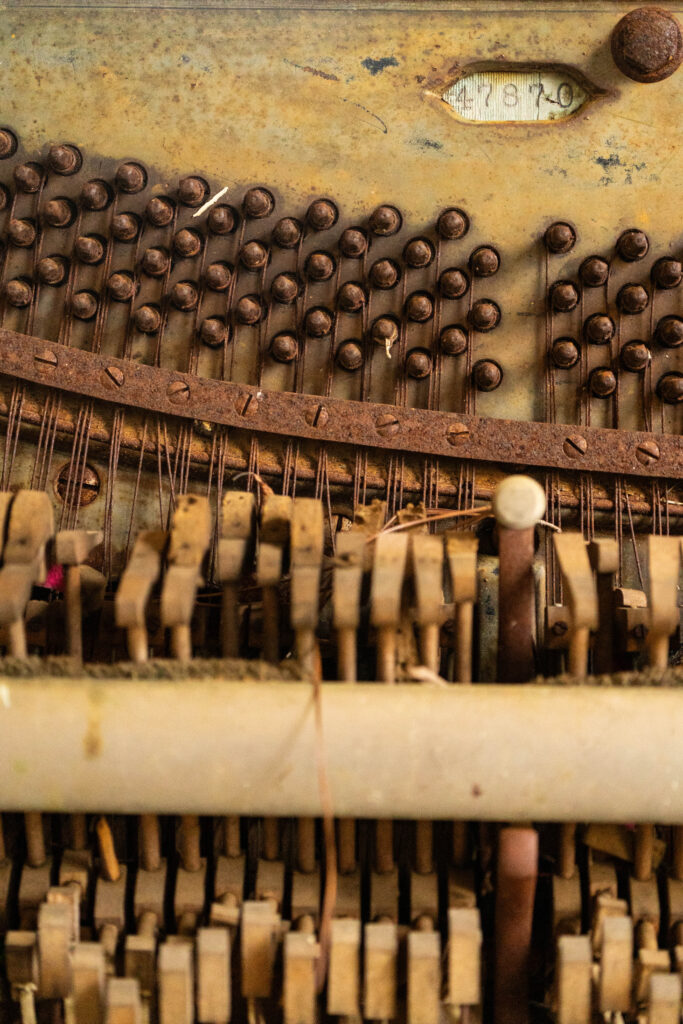
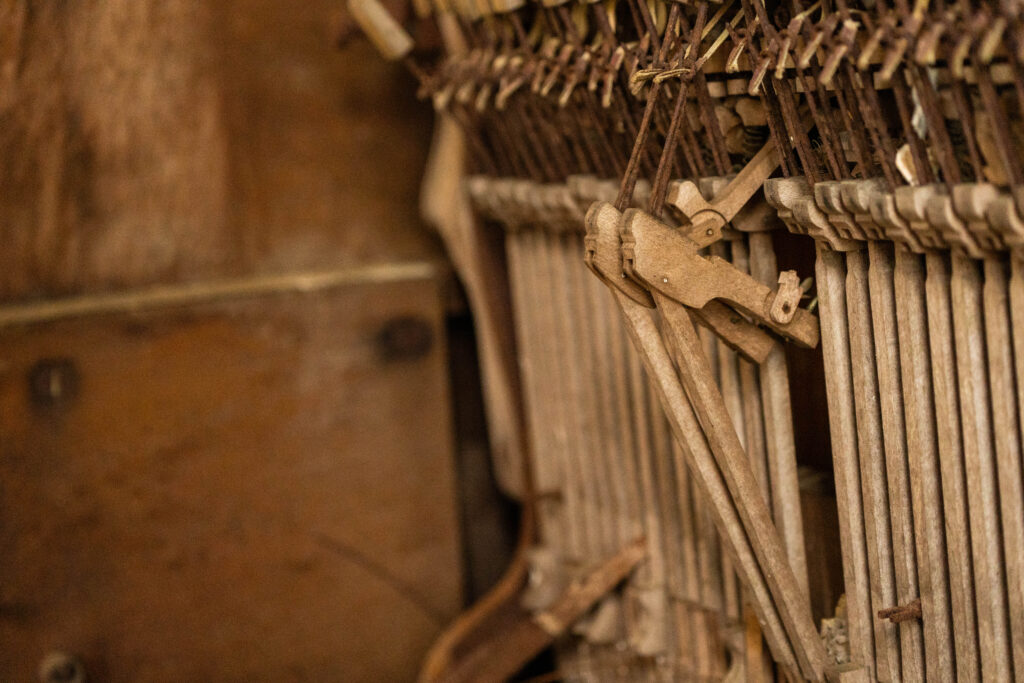
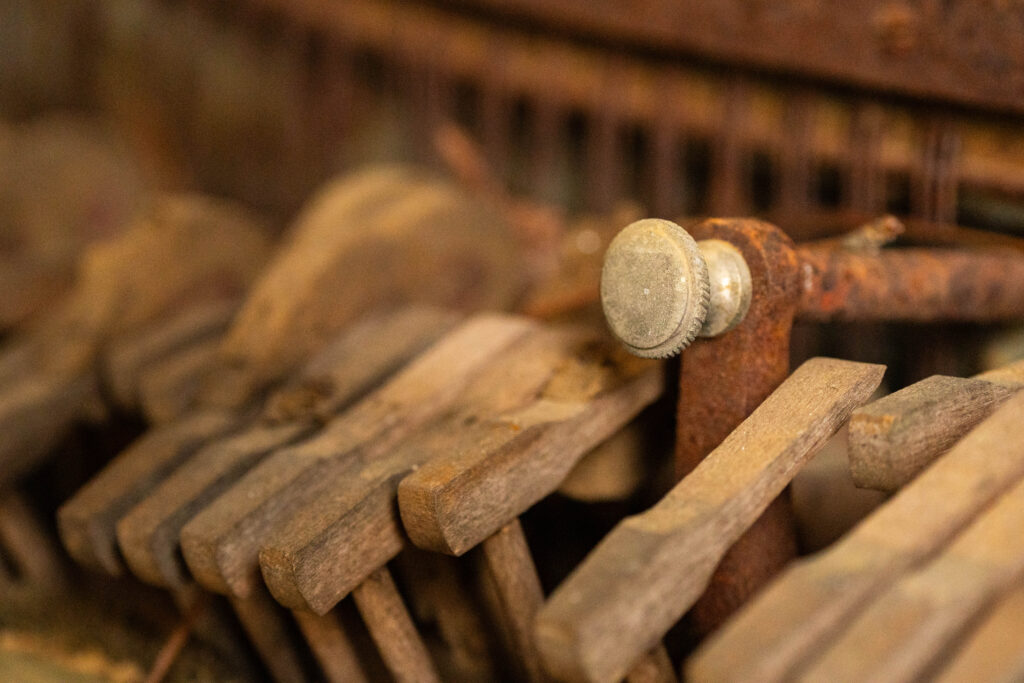
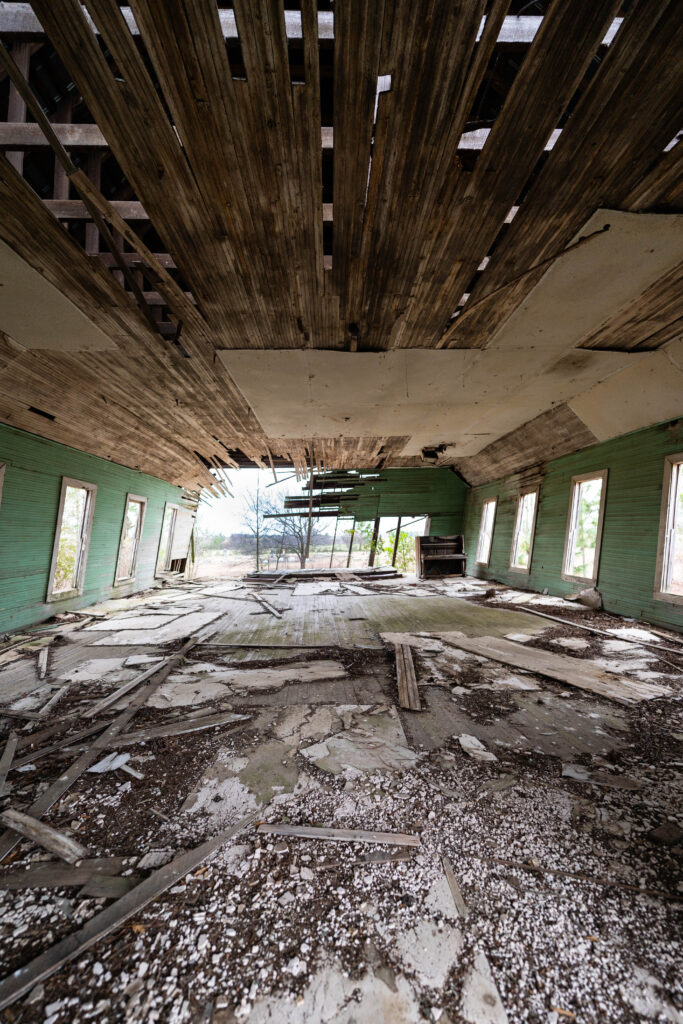
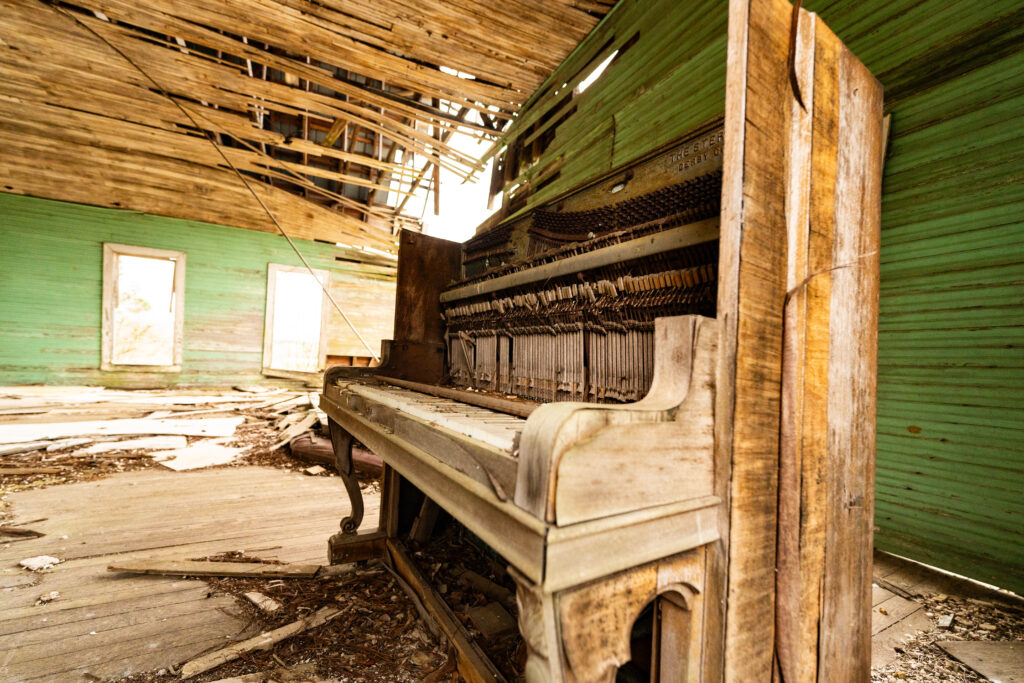
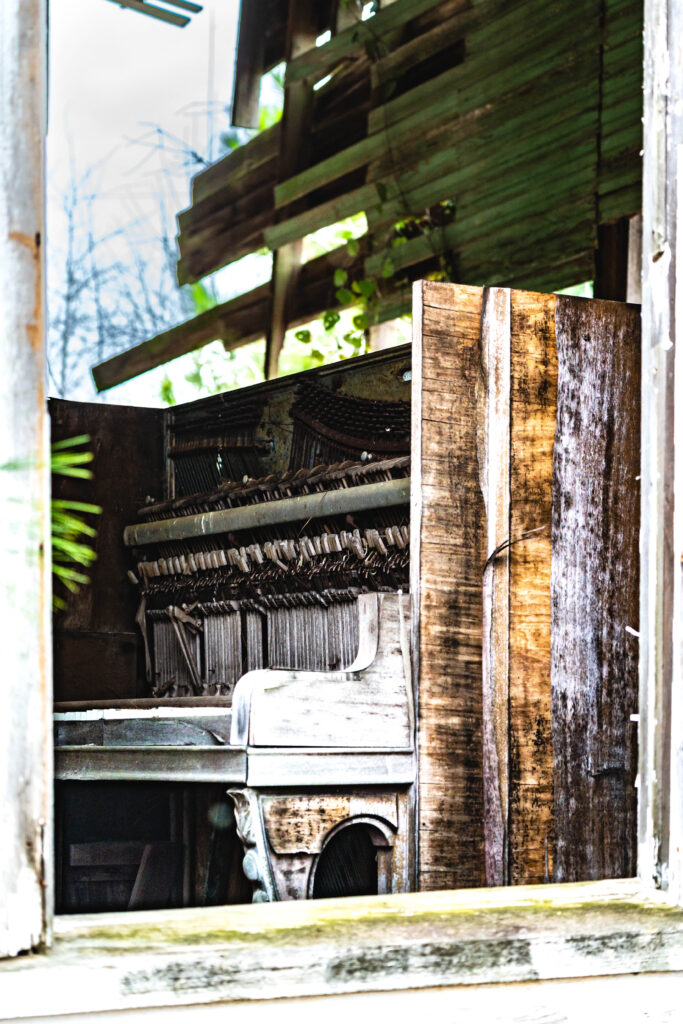
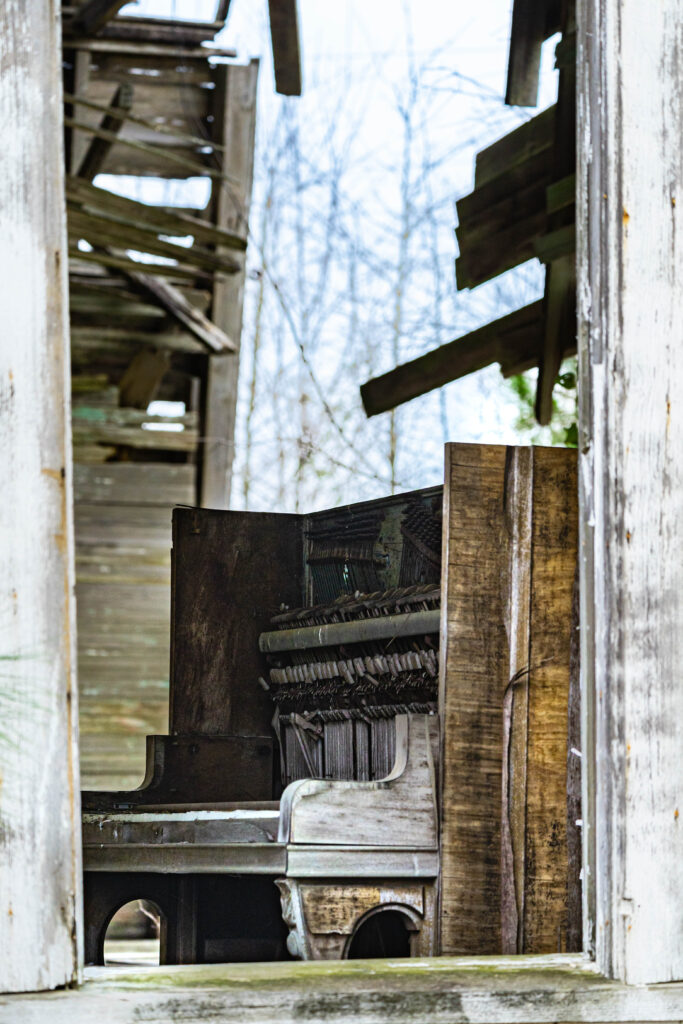
The drive to Young’s Chapel is classic South Georgia: flat stretches of farmland, old barns fading into the landscape, and peaceful backroads that remind me of what rural life once felt like. Maybe that’s why this church remains one of my favorites. Or maybe it’s the old piano inside—weathered, out of tune, yet somehow still standing strong through decades of neglect. There’s something about that piano’s stubborn endurance that speaks to me.
Young’s Chapel Methodist began in a simple brush arbor around 1875, serving a small rural congregation before a permanent structure was built—likely around 1876. The church originally stood at its first meeting site but was later moved about three miles to the land donated by John Thomas Young, whose family became central to the church’s story. The chapel was named in their honor, with members like Martin Young (state senator), Clyde Young (state representative), and Emma Young (longtime pianist) helping shape both the congregation and the surrounding community.
For nearly a century, services were held every third Sunday, but by 1974 only eight members remained, and the church officially closed. In later years, efforts were made to save the structure, but a 2017 tornado severely damaged the building, destroying the back wall and ending hopes for restoration.
Despite its fragile condition, Young’s Chapel still carries powerful memories. One descendant recalled sitting on the front pews as his mother played the piano and his father tended the potbelly stove, while another member drove his tractor 13 miles just to attend services. Those stories linger in the quiet of this little chapel, reminding us why preserving the historic rural churches of Georgia matters so deeply.
Recently I took my backroad driving partner here to begin our backroads driving, historic rural churches of Georgia exploring. Not only was it my first church to explore alone, it was ours together. We have explored many, so now I am going to begin documenting the ones we explore together.


Our Recent Backroads Route: Four Historic Churches + One Grand Cathedral
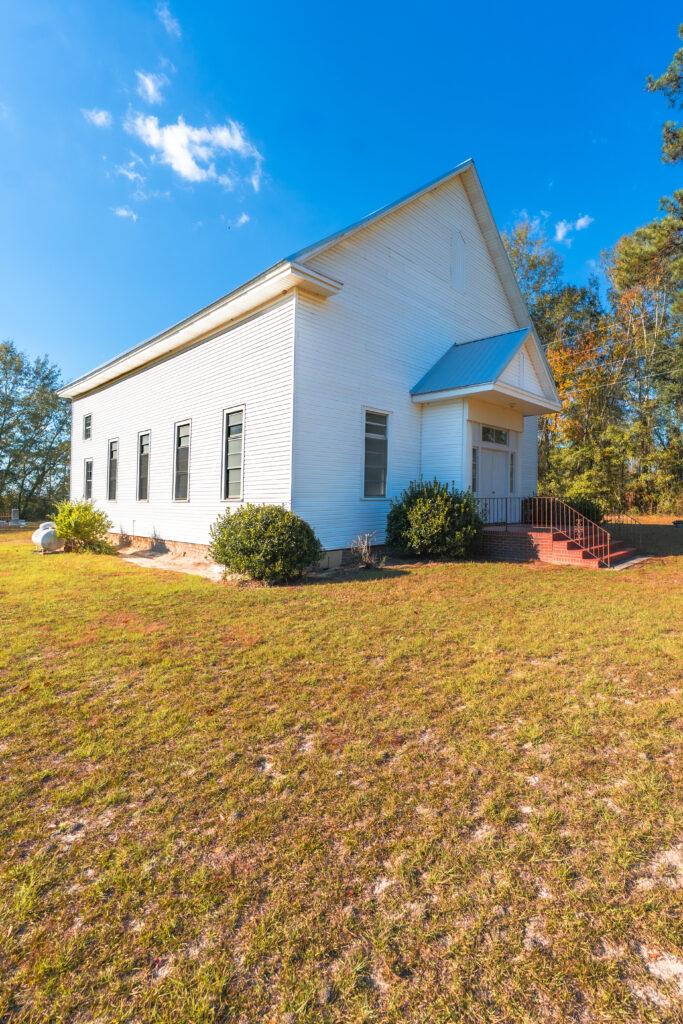
Shiloh Methodist – Tattnall County
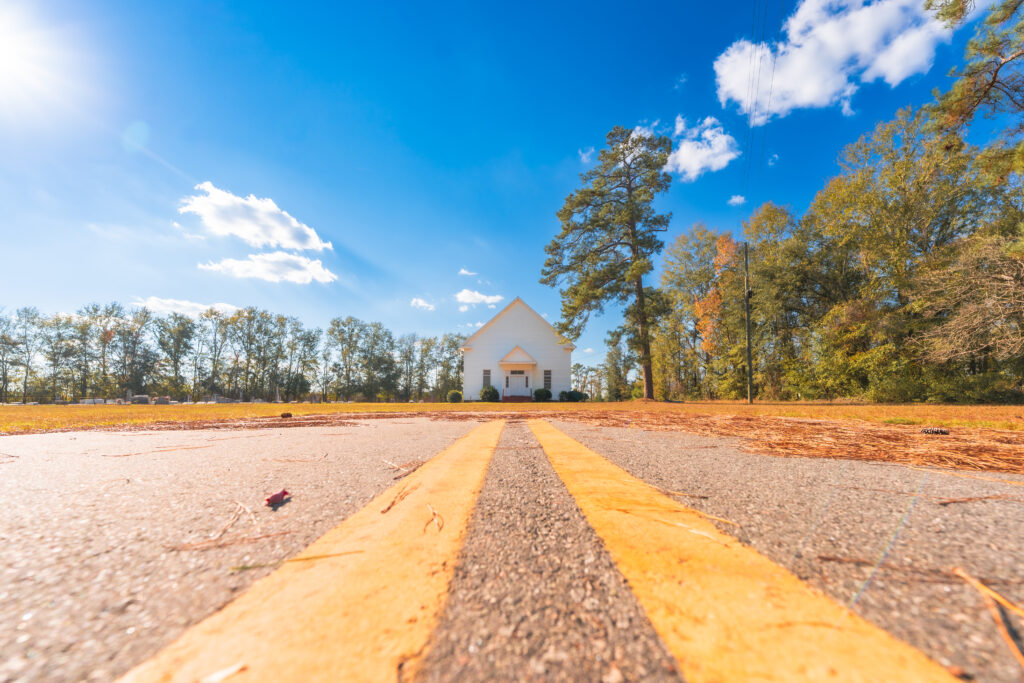
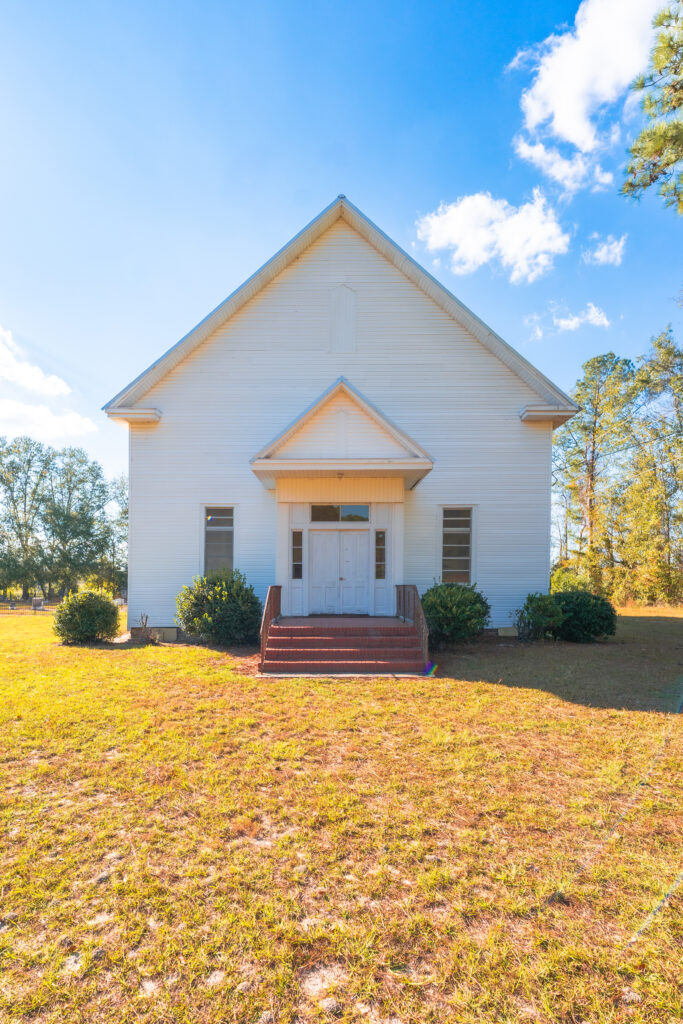
As we drove the backroads of Tattnall County, Shiloh Methodist came into view the way the best rural churches always do—quietly, humbly, and almost as if it had been waiting for us. The sunlight stretched across the old roadway, the double yellow line leading our eyes straight to the bright white sanctuary standing calm and still beneath a flawless blue Georgia sky.
There’s something special about seeing a church like this in person. Shiloh looks simple at first glance, but the moment we stepped out of the car, we felt the weight of its history. Shiloh Methodist is the second-oldest church in Tattnall County, with roots reaching back to around 1810 or 1812. Its earliest beginnings were modest: a peeled pine log chapel—just 20 by 30 feet—known as the Shiloh Meeting House. That first structure stood near today’s Old Shiloh Cemetery and served as the spiritual gathering place for early settlers under the leadership of William Eason.
By 1858, the congregation moved closer to a spring feeding into Thomas Creek, building a new frame meeting house. Then in 1899, the sanctuary that stands in my photos today was constructed beside that earlier two-door church. Standing in front of it now, with the sun warming the wooden siding and the pines rustling behind me, we could almost imagine families walking up these steps more than a century ago.
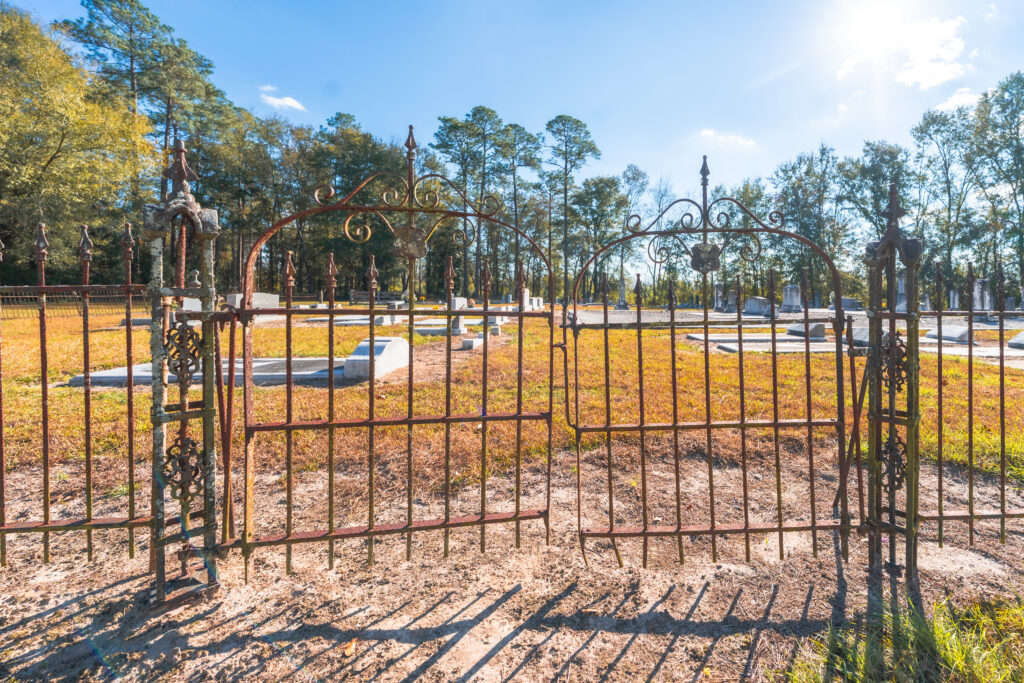
Old Shiloh Cemetery tells just as much of the story as the sanctuary itself. Even after the congregation relocated, many families continued burying their loved ones at the original site. The oldest grave dates to 1890, and among the burials are pioneer settlers, Methodist ministers, Confederate veterans, elected officials, and both white and Black community members—enslaved and free. Many of the wooden headboards that once marked graves have disappeared with time, leaving unmarked resting places that will never be fully identified.
Still, the love for this place survives. Local descendants have worked faithfully to preserve the cemetery and the church grounds, honoring the lives woven into this land. Though Shiloh Methodist is no longer an active congregation, it is still used for reunions and special gatherings. When we visited, we felt that deep sense of continuity—faith, family, and memory lingering long after regular services ended.
Walking around the sanctuary, photographing the tall windows, and standing beneath that enormous Georgia sky reminded me exactly why we love exploring the historic rural churches of Georgia. Places like Shiloh connect past and present in a way only a quiet backroad can reveal.
And on this trip, Shiloh felt like a reminder: these rural churches were built by ordinary people, yet they carry extraordinary stories—stories you can still feel if you take the time to slow down, pull over, and step into the silence.
Jones Creek Baptist – Long County
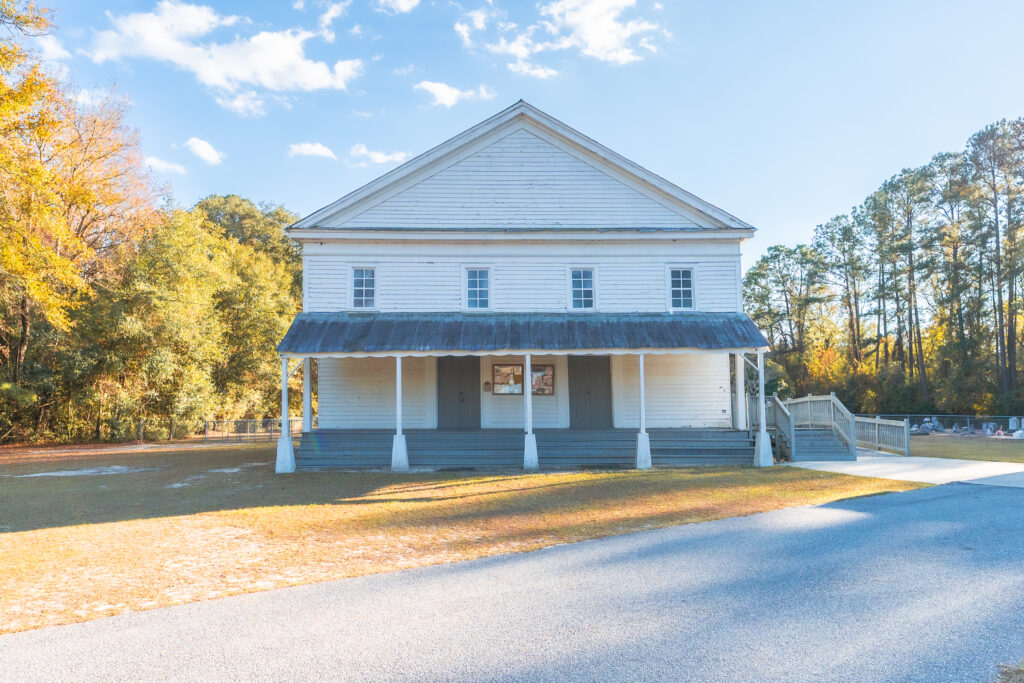
As we turned off the main road and eased down the toward Jones Creek Baptist, the scenery opened into a quiet clearing where the white, two-story sanctuary stood exactly as it has for generations—weathered, dignified, and full of stories. The late-afternoon sunlight lit the front porch, casting soft shadows across the old boards and giving the whole building a warm, golden glow.
Standing there with my camera, the first thing we noticed was how unchanged the structure remains. The 1856 sanctuary—designed by Hendley Foxworth Horne, a local craftsman—still carries the same simple lines and handmade details it would have had when members arrived by wagon or on horseback. From the steep gable roof to the long front porch with its rows of square posts, it feels like a step back into Georgia’s frontier era.
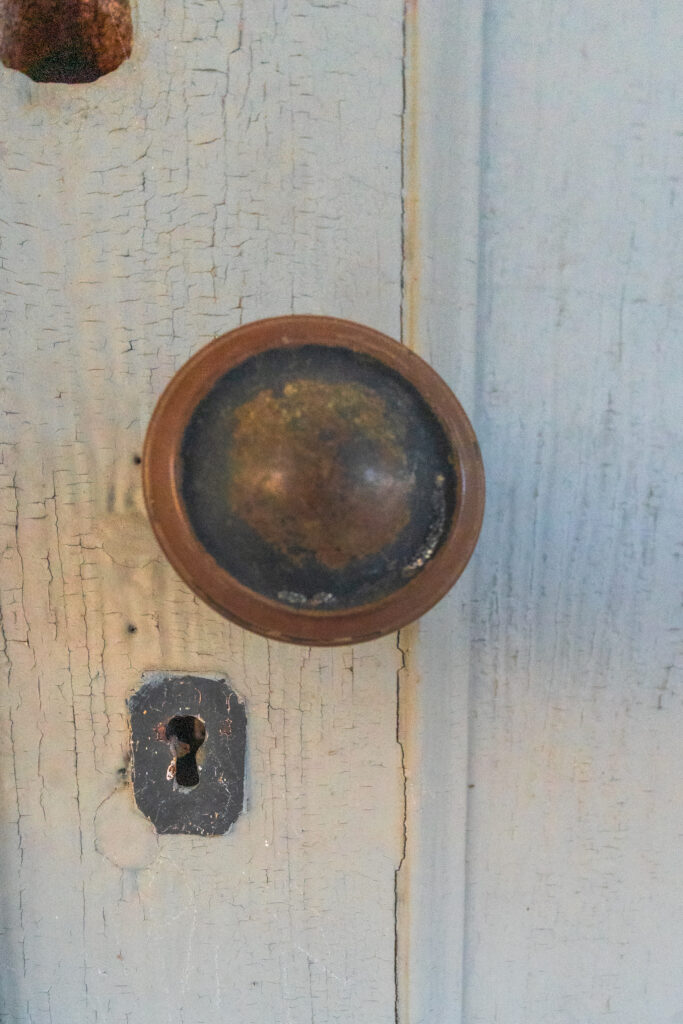
When I got close enough to photograph the door, I found myself lingering on the tiny details—like the cracked paint and the old iron keyhole, worn smooth by nearly two centuries of hands opening and closing that same door. Those small moments always stop me in my tracks. They remind me that these historic rural churches of Georgia aren’t just buildings—they’re touchpoints to real lives, real stories, and real struggles.
Jones Creek’s story begins on April 22, 1810, when Reverends John Goldwire and Moses Westberry gathered thirteen members from Beard’s Creek Baptist to constitute the church. We imagined those early families meeting under a brush arbor, long before the log meetinghouse was built in 1817 on land donated by William Walthour. By 1832, a larger frame building had been added, including a shed for enslaved members—a hard but honest reminder of the realities of early Georgia life.
Inside the current 1856 sanctuary, the second-floor gallery that once held enslaved members has since been converted into Sunday School rooms and displays of preserved artifacts. Even without stepping inside on this visit, just knowing that history gave the place a heavier silence.
One of the things we love most about exploring these rural churches of Georgia is reading how human their old church minutes are. Jones Creek’s records are full of frontier life—messy, imperfect, real. In 1822, a member confessed to striking another “a damned raskel,” and in 1824, two men were expelled over lies and cheating. I couldn’t help but smile thinking about it—it’s easy to romanticize these places, but the people who filled them were just as complicated as we are today.
The church weathered the Civil War as well. By 1861, so many members were off fighting that they postponed church business altogether. And in the painful years that followed, the records reflect the tension of figuring out how to handle “colored members who went over to the enemy,” eventually establishing a separate burying ground in 1867.
As we walked around the quiet property, the cemetery gently stretching into the trees, I felt an overwhelming respect for the care that has kept this place standing. Jones Creek Baptist is more than one of Georgia’s earliest frontier churches—it’s a living archive of the people who shaped this region, in both beautiful and complicated ways.
Driving away, we couldn’t help but feel grateful that places like this still exist. Thanks to careful stewardship and the passion of local families, Jones Creek Baptist continues to tell its story to anyone willing to slow down, pull over, and listen.
Walthourville Presbyterian – Long County
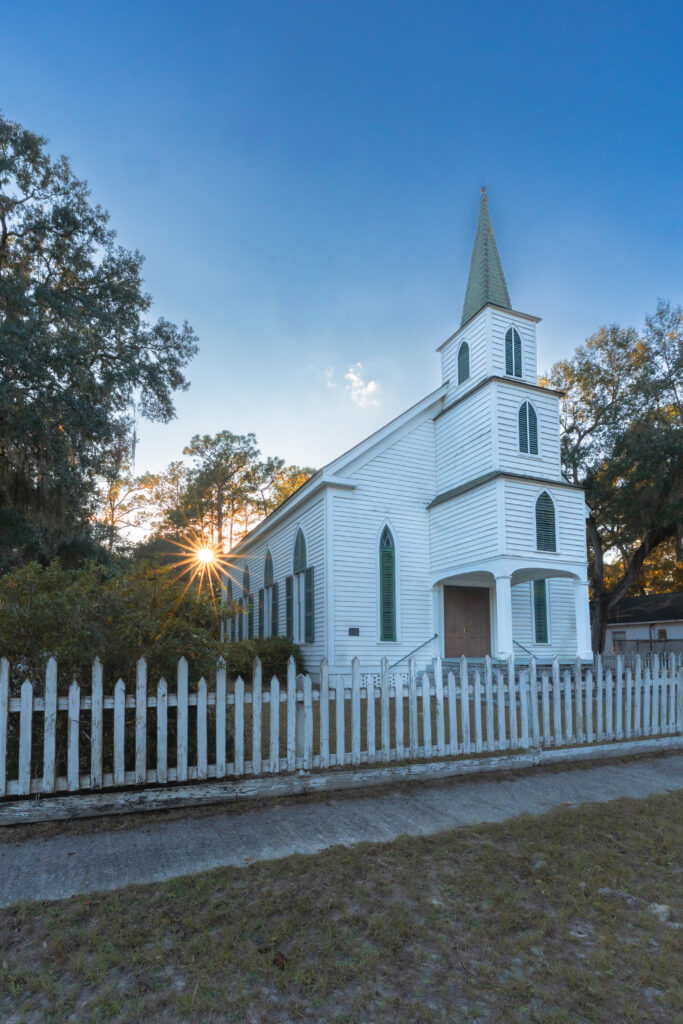
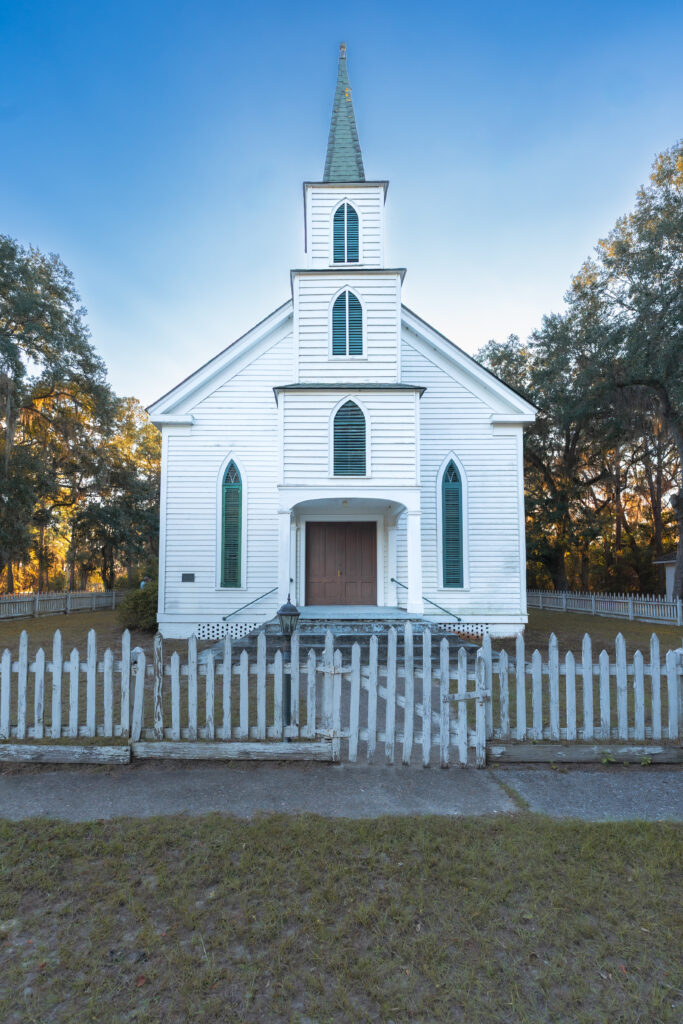
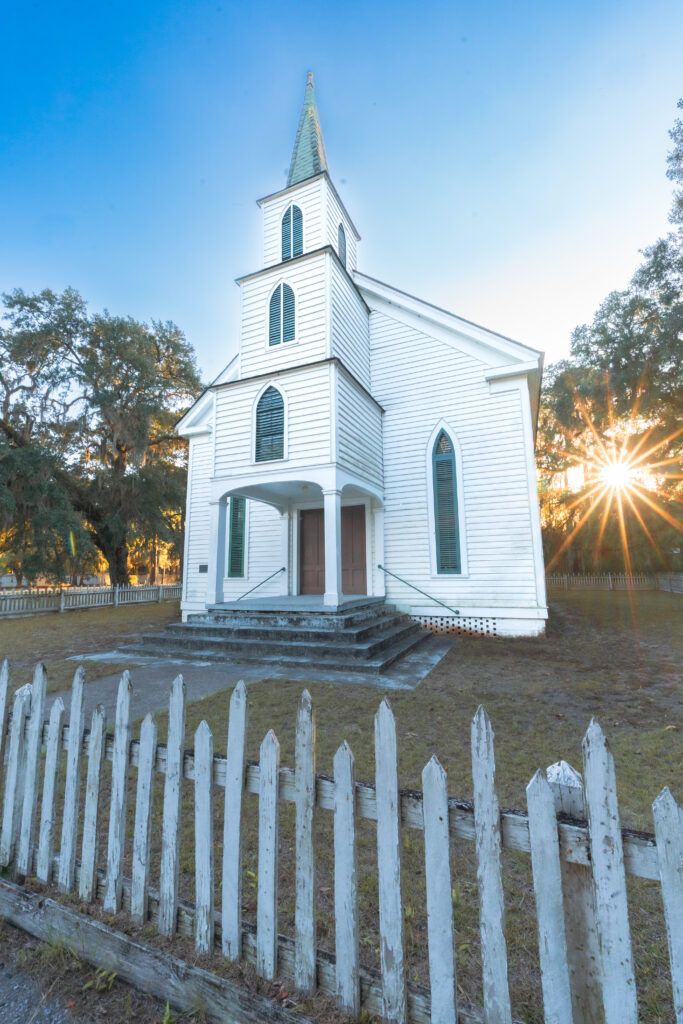
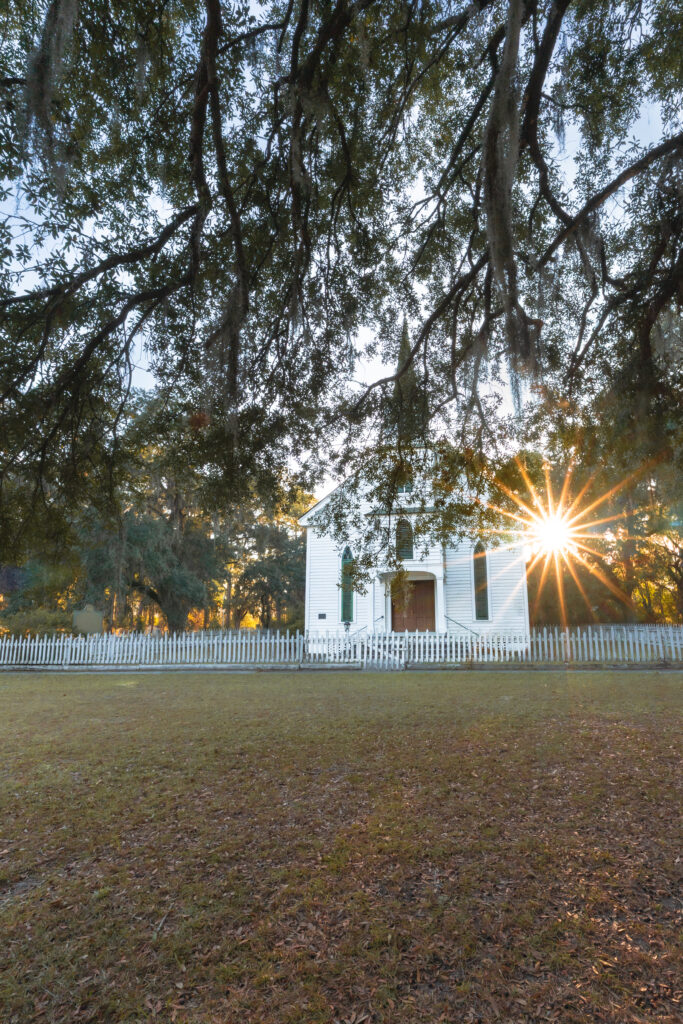
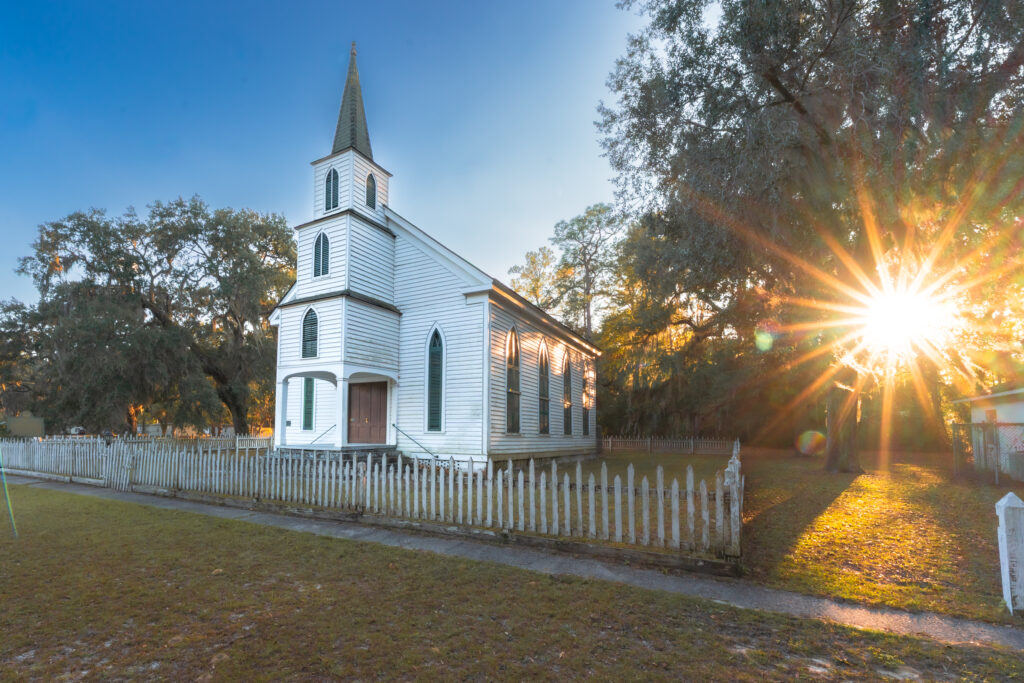
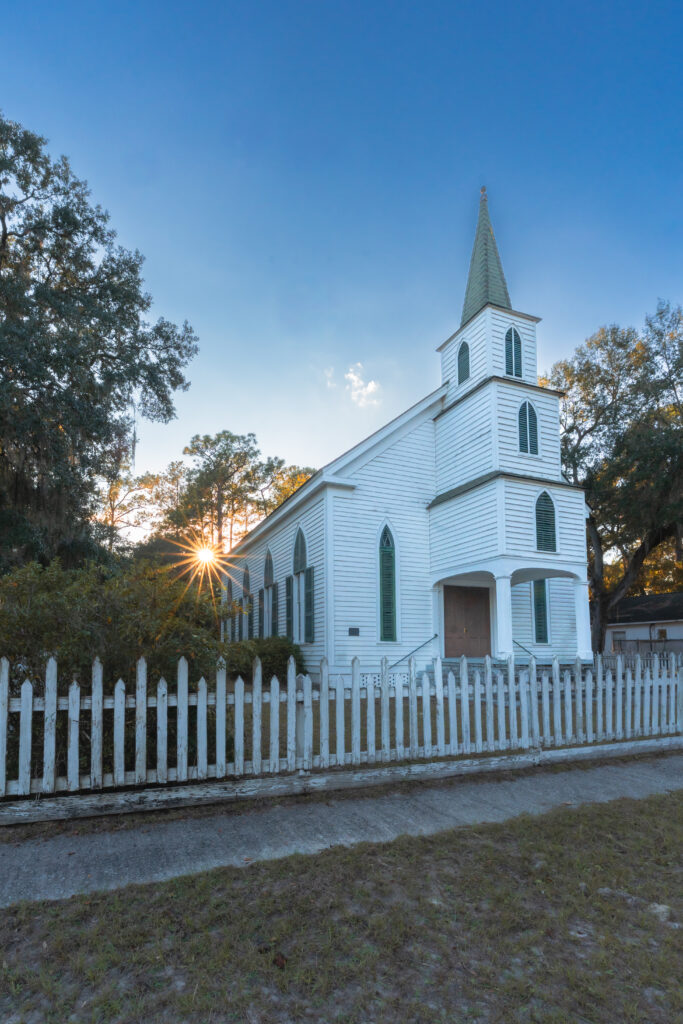
As we pulled up to Walthourville Presbyterian, the late afternoon light spilling across the weathered picket fence and the towering white facade, we instantly felt like we’d stepped into a preserved moment of 19th-century Georgia. The sanctuary—built in 1884—looks almost untouched by time, its Gothic-inspired windows, steep steeple, and classic white clapboard rising gracefully against the blue sky.
The front gate, slightly crooked and worn by years of sun and storms, creaked softly when we pushed it open, adding to the charm of this beautifully preserved piece of Liberty County’s story.
Even though the current building dates to the 1880s, the congregation’s roots stretch much farther back. The first meetinghouse here was established in 1820, shared by both Baptists and Presbyterians. A new sanctuary was built in 1845, only to be destroyed by fire in 1877. The congregation rebuilt the next year—only to lose that church again in a storm in 1881.
Standing before the church today, we couldn’t help admiring the resilience of the people who called this place their spiritual home. After two devastating losses, they still pressed on, finally raising the beautiful sanctuary we see now in 1884 on land purchased from the Walthour estate.
Walthourville Presbyterian was one of three “Retreat Churches” associated with Midway Congregational Church, founded in 1752. These retreat churches were intentionally built inland, away from the mosquito-ridden swamps of the coastal low country. Flemington Presbyterian came first, Walthourville second, and Dorchester Presbyterian third. The strategy was literally lifesaving—and the inland sanctuaries ultimately became historic landmarks in their own right.
In 1855, thirty-three members of Midway were dismissed to form a new congregation here. When asked whether they wished to remain Congregationalist or join the Presbyterian Church, the majority—twenty-two—chose Presbyterian governance. By 1861, Walthourville was the second largest congregation in its presbytery, known especially for its charitable giving.
The history here is layered, especially when it comes to race and worship in the antebellum South. Church records show that in the late 1850s, a separate building was erected nearby for Black worshippers, where women of the church taught Sunday School classes. After the Civil War, Black members established their own congregations—yet Walthourville’s story remains incomplete without acknowledging their presence and contributions.
Walking along the fence line and around the side yard, we could almost imagine the voices, hymns, and footsteps that once filled this space. The craftsmanship of the sanctuary—the vertical siding, the arched shutters, the thoughtful symmetry—speaks to the pride the community placed in rebuilding after so many setbacks.
Though the church is no longer active, it still opens its doors for a beloved homecoming reunion every October. For many years, James Davis and his family cared for the property, ensuring that this sanctuary—this jewel of 19th-century Liberty County—continues to stand, steady and graceful, telling its story to anyone willing to wander down its quiet road.
Leaving Walthourville Presbyterian behind, we felt the same sense of gratitude we’ve felt at so many historic churches of Georgia—thankful that these backroads continue to lead us to places where the past is still alive, still visible, and still deeply meaningful.
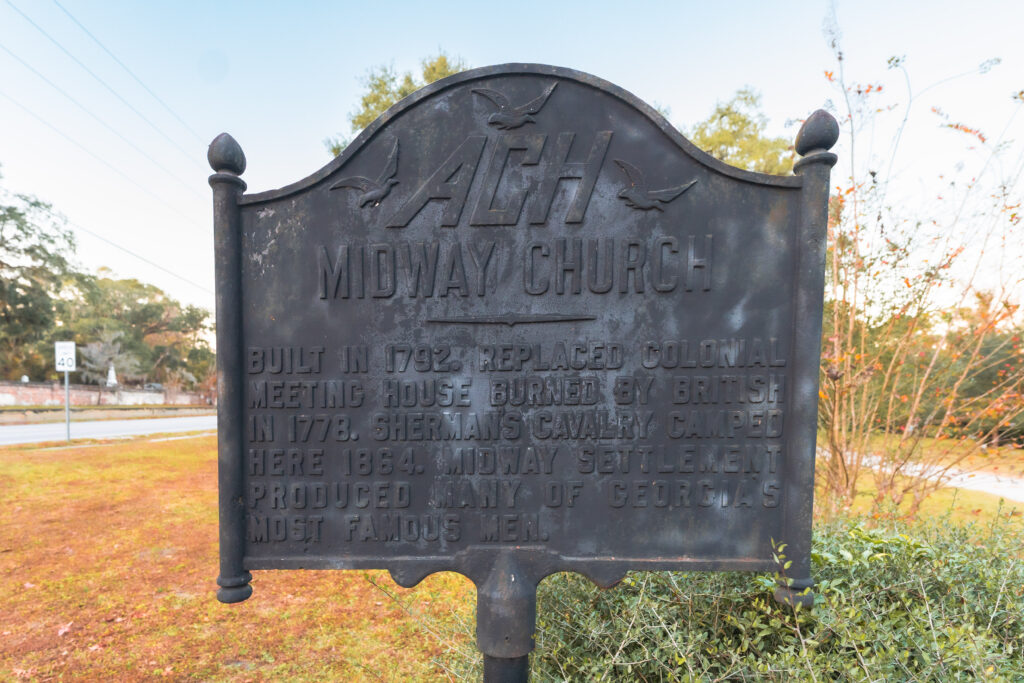
Midway Congregational Church – Liberty County
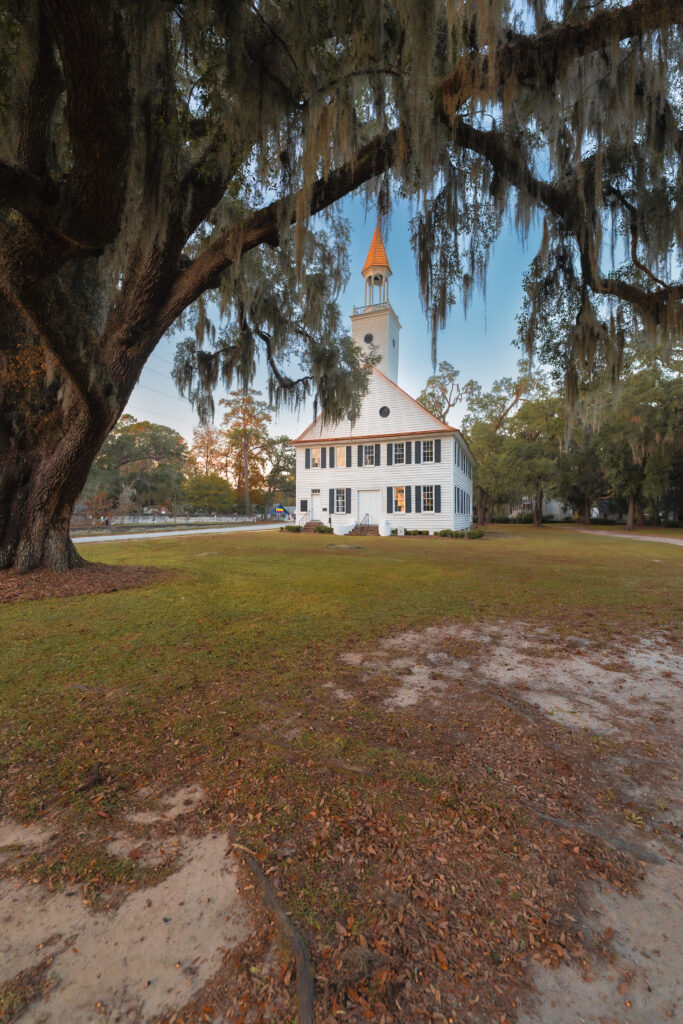
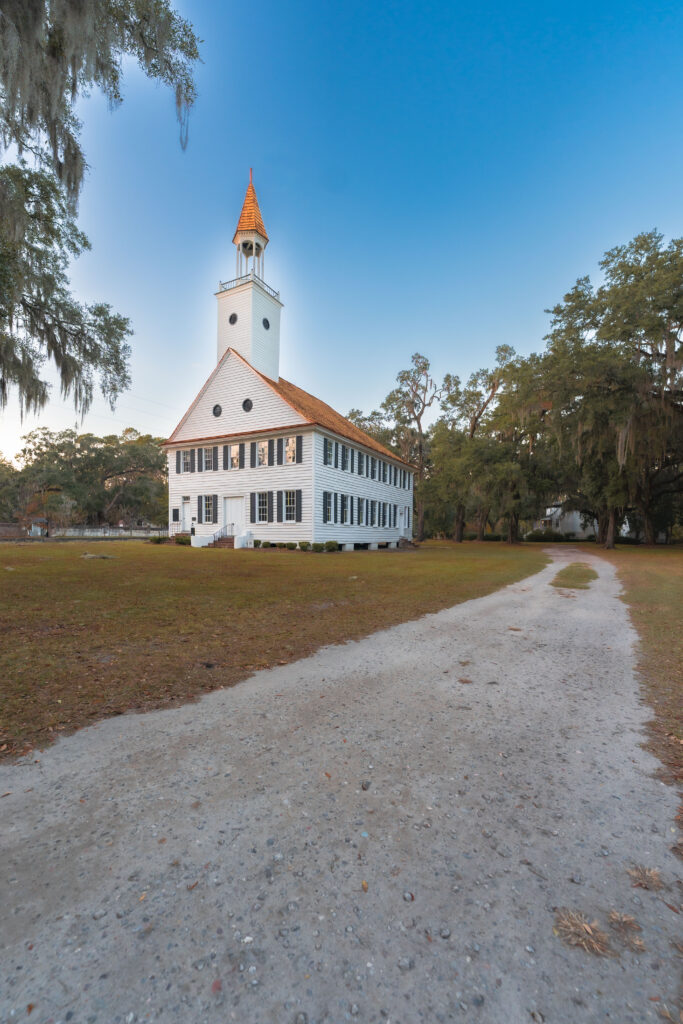
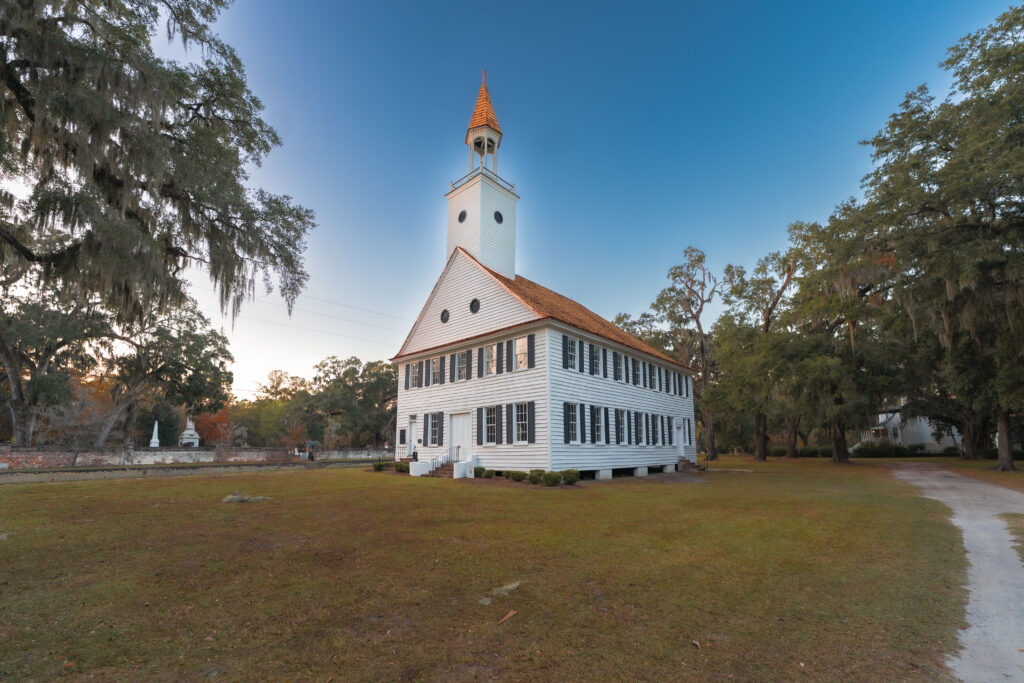
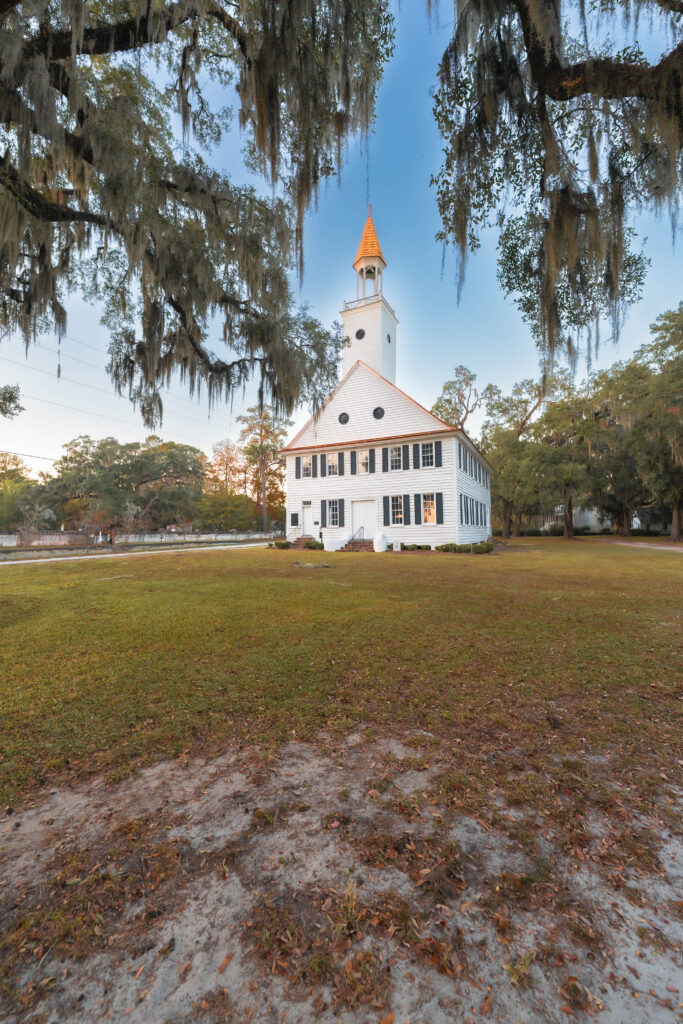
As we turned onto the sandy drive leading to Midway Congregational Church, we felt that familiar rush that always comes with exploring the historic rural churches of Georgia—that moment when the trees open, the light shifts, and a piece of history rises quietly into view.
And this time, the sight of the church at the end of the road truly took our breath away.
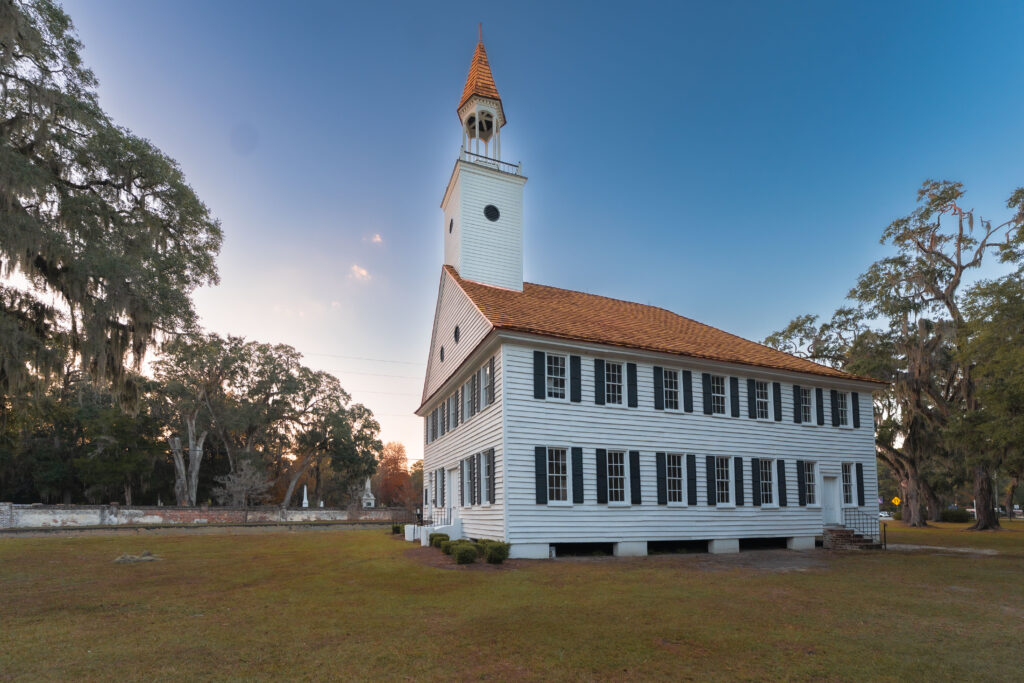
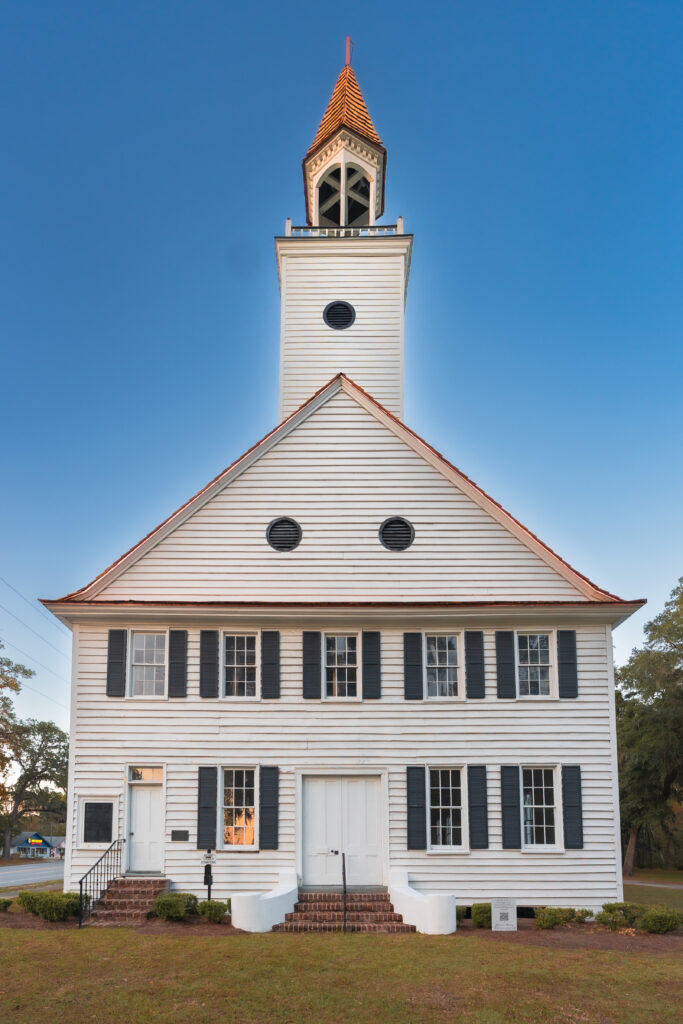
The white 1792 sanctuary stood tall and elegant, crowned by its slender steeple and framed in soft evening light. Its symmetry, black shutters, and clean colonial lines made it look like it belonged on a grand estate in Virginia, not tucked into a quiet corner of Liberty County along a dirt road softened by moss-covered oaks.
Midway Congregational was organized in 1752, and although the current structure wasn’t built until forty years later, its story begins long before that. Prosperous planters from South Carolina’s Dorchester region—armed with enslaved labor, rice and indigo culture, and the means to carve out a wealthy coastal community—crossed into Georgia after slavery was legalized in 1751. Midway grew out of a massive 31,950-acre land grant meant to serve as a buffer between the colony and both the Spanish and the Creek.
The first church stood across the road, near the cemetery that remains one of the most historically significant in Georgia. As we walked around the present sanctuary, we couldn’t help reflecting on the dual narratives embedded in its history: privilege and suffering, influence and bondage. Below, the pews once seated some of the colony’s most powerful men—including Lyman Hall, who signed the Declaration of Independence, and Nathan Brownson, another Continental Congress delegate. Above, the galleries were built for enslaved worshipers who were forced to practice their faith from a separate level.
Midway’s story isn’t without tragedy. In 1778, British forces burned the original church during the Revolutionary War, destroying farms and leaving devastation behind. It took fourteen years before the congregation built the sanctuary that still stands today—completed in 1792, a testament to endurance and rebirth.
Walking the grounds together, the late-day shadows stretching long across the grass, we could feel the weight of that history. This church has witnessed colonial settlement, war, loss, reconstruction, and centuries of change. Yet it still stands strong—beautiful, solemn, and deeply symbolic.
Today, Midway Congregational and its cemetery form the Midway Historic District, listed on the National Register of Historic Places since 1973. Standing there beneath the moss-draped oaks, surrounded by the quiet coastal air, it’s easy to see why this is considered one of the most treasured historic churches of Georgia.
As we made our way back down the sandy road, we felt grateful—grateful to witness such an enduring piece of Georgia’s early history, and grateful that driving the backroads continues to lead us to places where the past still whispers through the trees.
Bonus Stop: Cathedral Basilica of St. John the Baptist
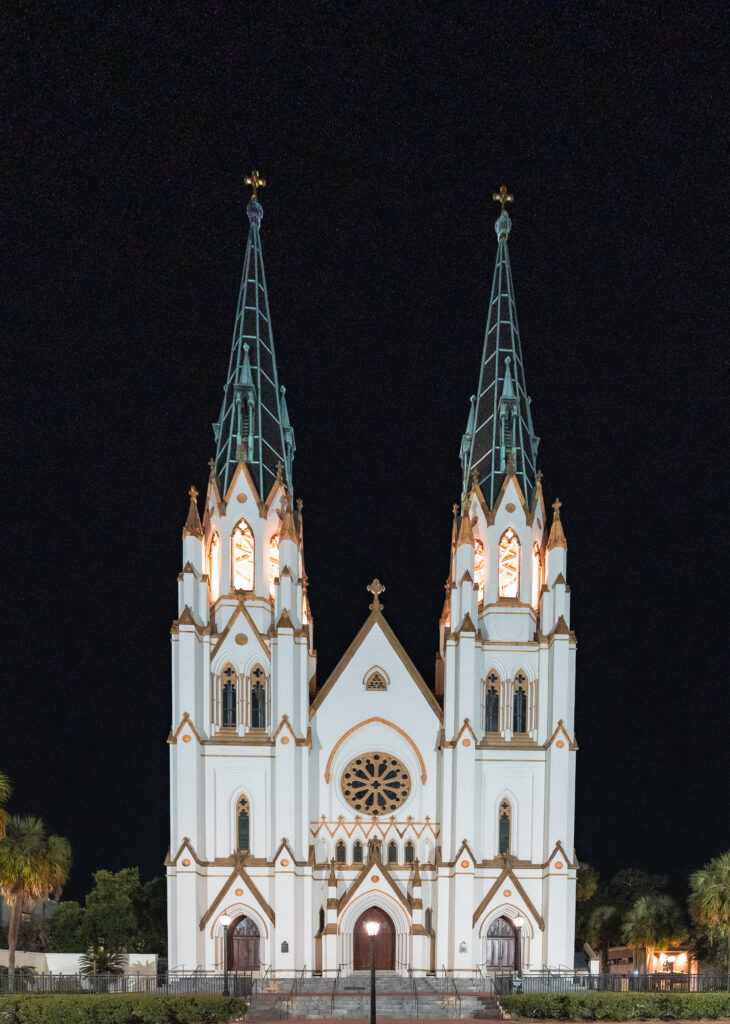
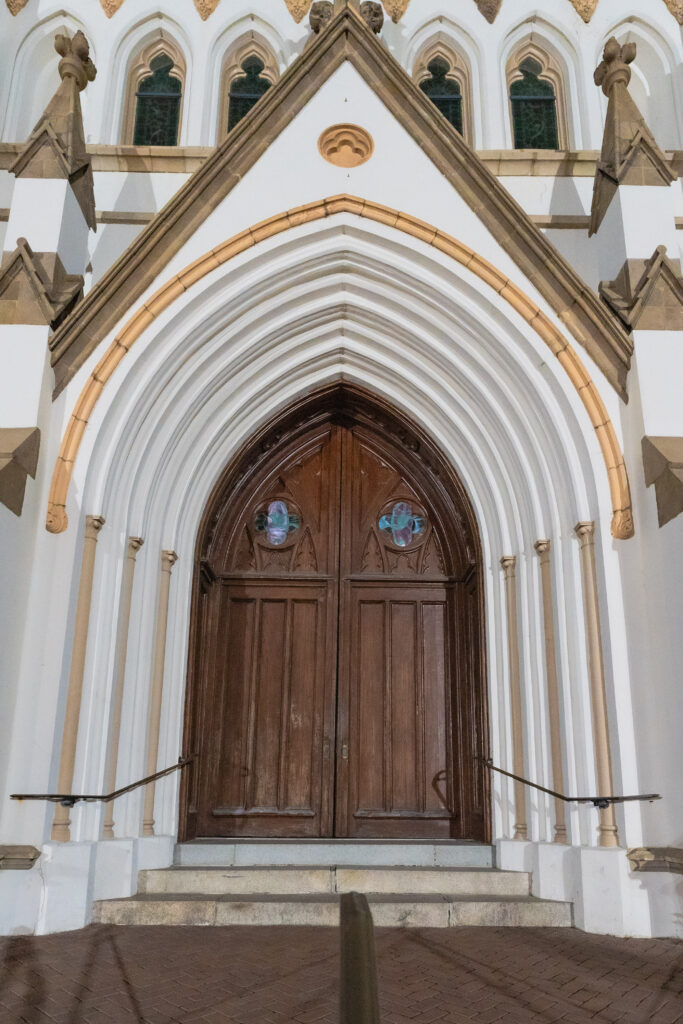
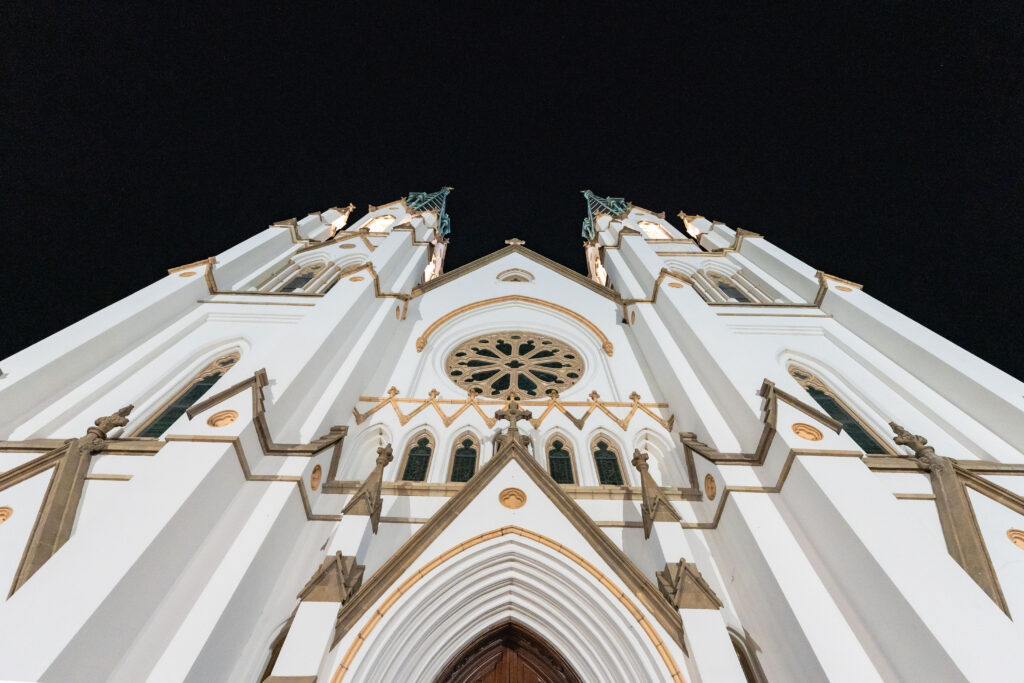
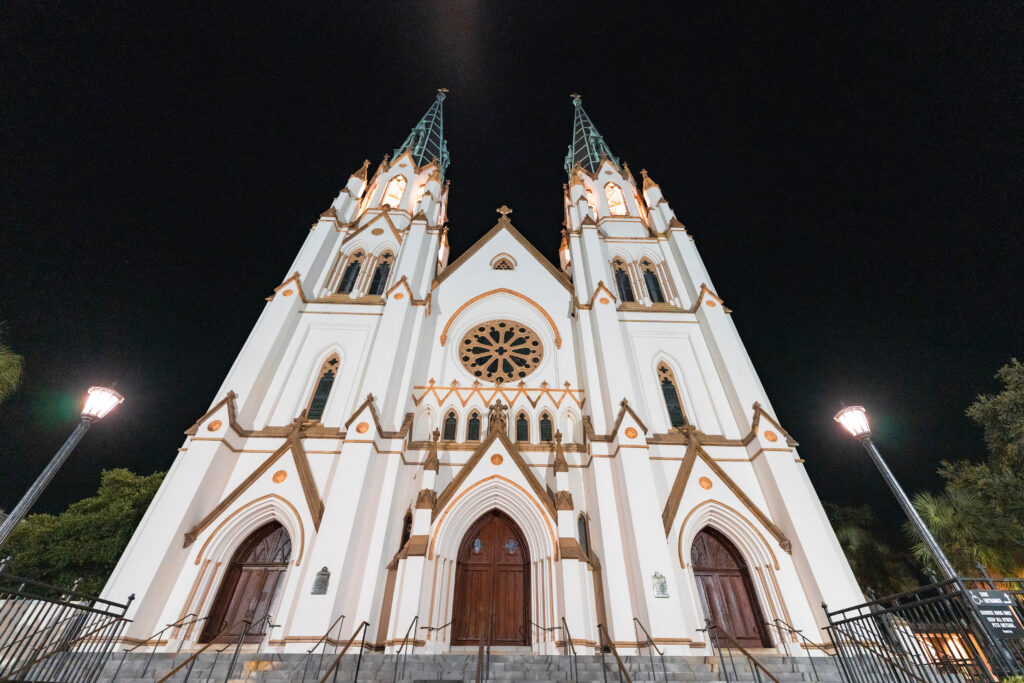
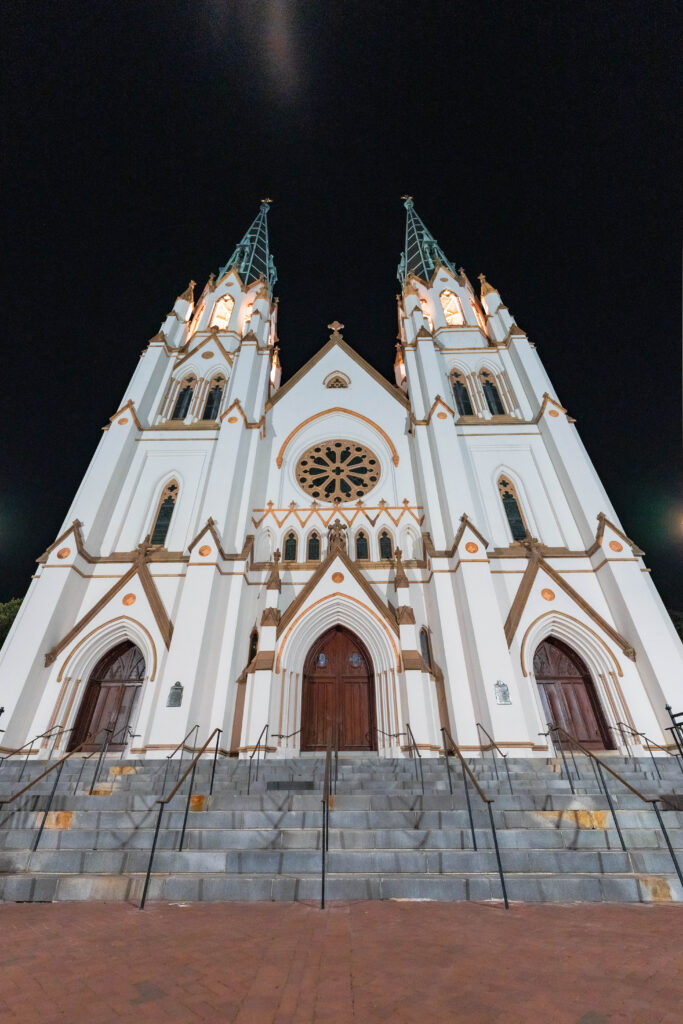
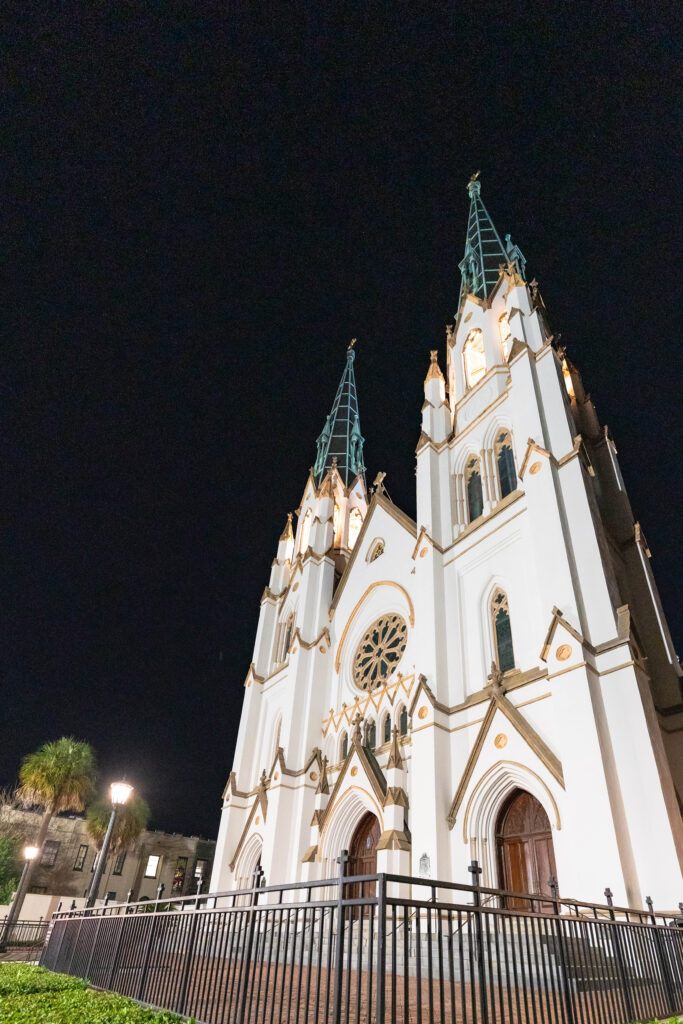
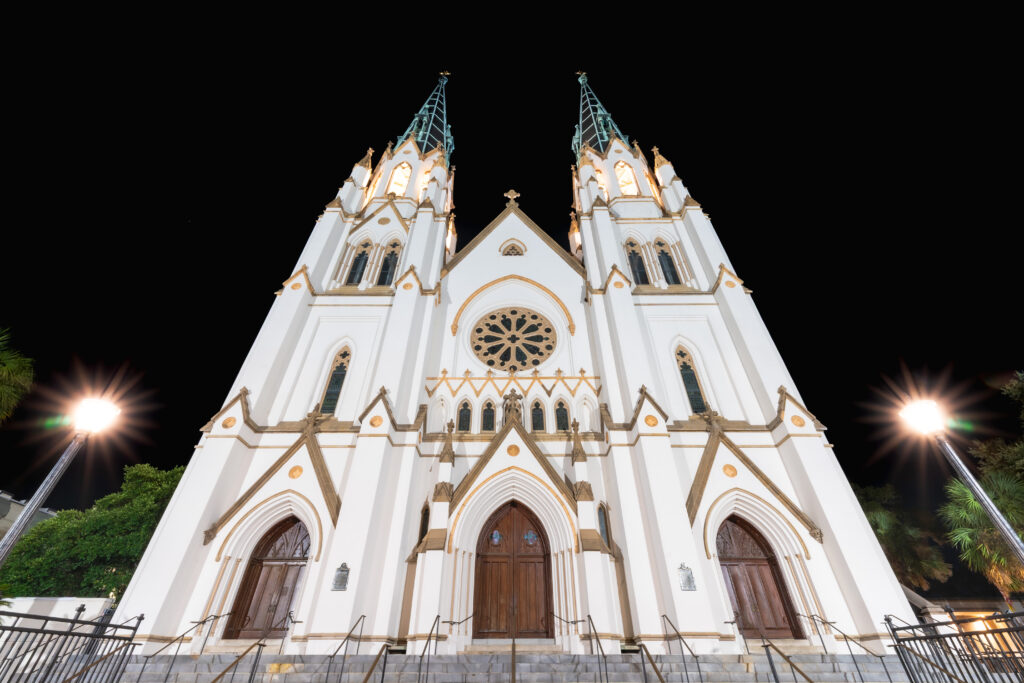
To end our day exploring the historic churches of Georgia, we made our way into Savannah to visit the Cathedral Basilica of St. John the Baptist — a stunning contrast to the quiet rural sanctuaries we spent the day photographing.
The cathedral’s story reaches back to the late 1700s, when French and Haitian immigrants established Savannah’s first Catholic parish. The current Gothic-style cathedral began rising in 1873, but its history has been anything but smooth. A devastating fire in 1898 left only the exterior walls and spires standing. Undeterred, the congregation rebuilt quickly, celebrating their first Mass in the restored sanctuary just a year later. By 1912, the cathedral’s interior — including its magnificent stained-glass windows from Austria — was complete. After major restorations throughout the 20th century, the church was elevated to the status of minor basilica in 2020.
Today, the Cathedral Basilica of St. John the Baptist stands as one of Georgia’s most iconic and breathtaking religious landmarks — a place where centuries of history, resilience, and faith come together under soaring vaulted ceilings and brilliant stained glass.
While not rural, this historic cathedral offered a beautiful contrast—reminding me that Georgia’s sacred spaces range from the grand to the humble, the urban to the deeply rural.
Reflections From the Rural Road
This weekend reinforced why we love exploring the historic rural churches of Georgia:
- Each church tells a human story—faith, community, loss, and perseverance.
- Many are still standing against the odds, weathering storms, time, and neglect.
- Driving the backroads to find them feels like a treasure hunt through the state’s oldest memories.
The truth is, these churches aren’t just buildings. They’re the backbone of the communities that shaped Georgia’s identity. And every time we visit one, we’re reminded why documenting the rural churches of Georgia matters—not just for history lovers, but for anyone seeking connection to the land and its people.
Our mission to visit them all is still ongoing… and honestly, that’s the best part. There’s always another quiet road, another turn, another church waiting to be rediscovered.
Thinking of Taking Your Own Backroads Historic Rural Church Tour?
Here are a few tips from someone who has driven miles of Georgia backroads:
- Use the HRCGA map to plan your route—but leave room for wandering.
- Start early for the best sunlight and cooler temps.
- Bring a camera and tripod—photograph everything, from dirt roads to steeples.
- Go slow. These aren’t roads meant to be rushed.
- Be respectful—many churches sit on private or sacred land.
Exploring the historic rural churches of Georgia isn’t just a road trip. It’s a journey into the heart of the state, guided by the backroads and the stories they carry.
-S&B
Discover more from The Empty Nesters Travels
Subscribe to get the latest posts sent to your email.